A working prototype is only the beginning. The moment a client decides they want their device in series — that is the moment a project becomes a product. This transition is not trivial and requires a different mindset from the prototype phase: consistency, repeatability and process control become just as important as the technical correctness of any individual unit.
We handle small series from 50 to 500 units and medium series from 500 to 5000 units. These numbers are not absolute — they depend on project complexity. A simple board with a small number of components can go into larger runs; a highly complex multilayer board with dense BGA layout and demanding PTH assembly has its natural limits conditioned by cycle time and the level of attention each unit requires. Every project is assessed individually and we give a realistic capacity estimate for the given complexity.
Series preparation
Every series begins with preparation that is more important than it appears. We verify that all components have arrived in the correct quantities and with correct documentation. BOM verification and physical component inspection eliminate the risk of incorrect parts that would only be discovered in finished devices. Pick&Place programs, reflow profiles and test protocols from the prototype phase are reviewed and confirmed for the series — because what worked on five prototypes must work consistently on five hundred units.
For panelisation — grouping multiple boards onto one PCB panel for more efficient assembly — we choose a format that optimises material utilisation and equipment compatibility, with minimal waste at panel edges. The stencil is prepared and verified for the given PCB revision.
Production flow
The production flow follows the same sequence as for a prototype, but with emphasis on consistency between units. The stencil printer applies paste uniformly to every panel. The Pick&Place machine runs according to the verified program with checked feeders. The reflow oven holds the defined profile without deviation. Every board undergoes visual inspection under the microscope immediately after reflow, before moving to PTH assembly or directly to testing.
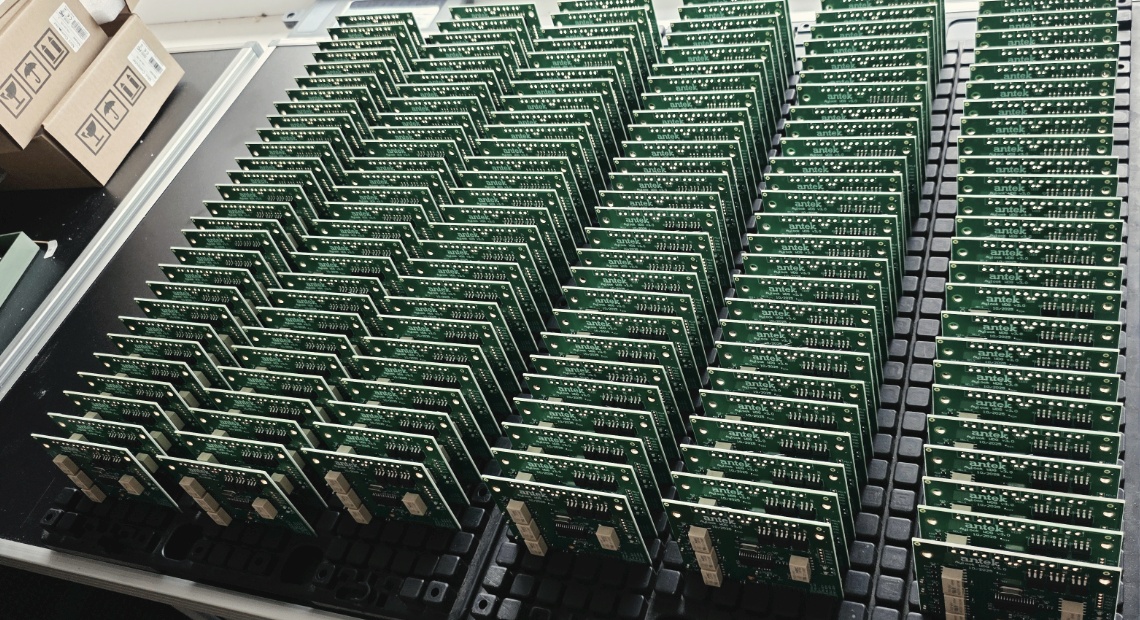
Defects found during the process are recorded and analysed. If a particular defect begins to show a trend — for example, the same component shifting at the same position on multiple boards — that is not coincidence and is not treated as coincidence. We stop, identify the cause and correct the process before continuing. A series that ends with a low defect rate is not luck; it is the result of a process that is under control.
Programming and testing in series
Every unit from a series goes through programming according to the defined procedure and functional testing according to the test protocol. No test steps are skipped due to deadline pressure. A device that has not passed all tests is not a finished device — regardless of how visually flawless it appears. Test results are recorded by serial number or LOT, enabling traceability in the event a problem emerges later in the field.
Component and inventory management
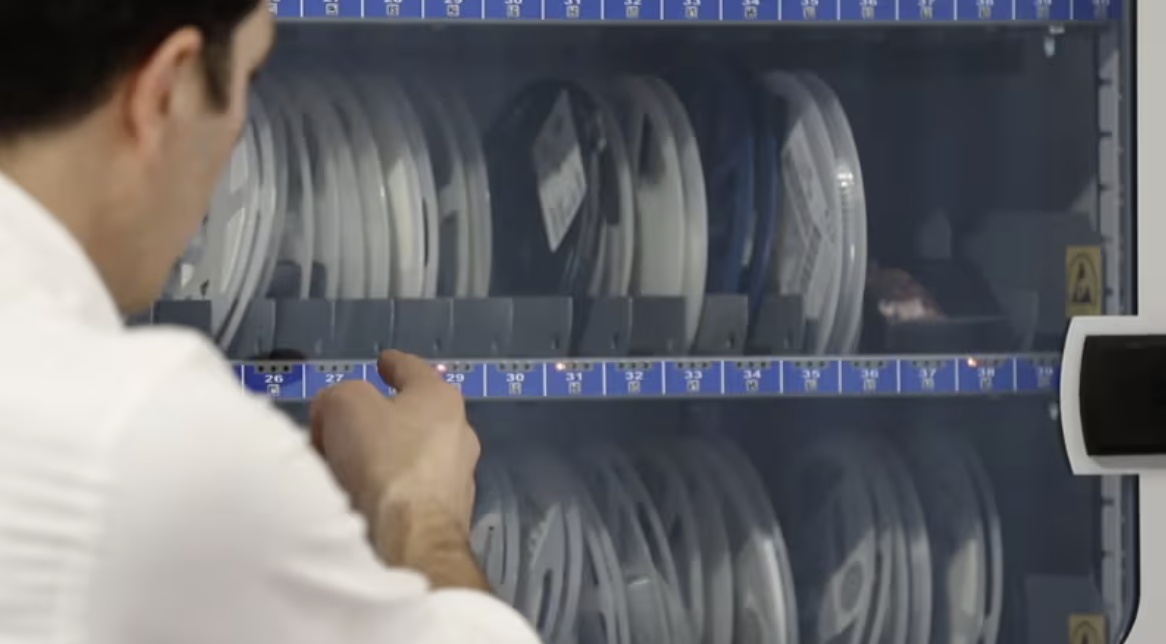
For clients planning multiple series we store components between orders. Components are stored separately by project, under conditions appropriate for electronic components — controlled humidity for MSL-sensitive parts, antistatic protection, clear records by LOT and date of receipt. A client ordering a new series does not need to go through the entire procurement cycle again for components already held in our warehouse — which reduces lead time and lowers costs.
Delivery
Finished devices are delivered packaged as agreed — individually, in sets, with or without accompanying documentation, depending on what the client needs. Delivery is accompanied by a series report: total number of units, number of units that passed testing, number of reworked units and all relevant process notes. Transparency towards the client is not merely courtesy — it is part of what serious electronics manufacturing means.